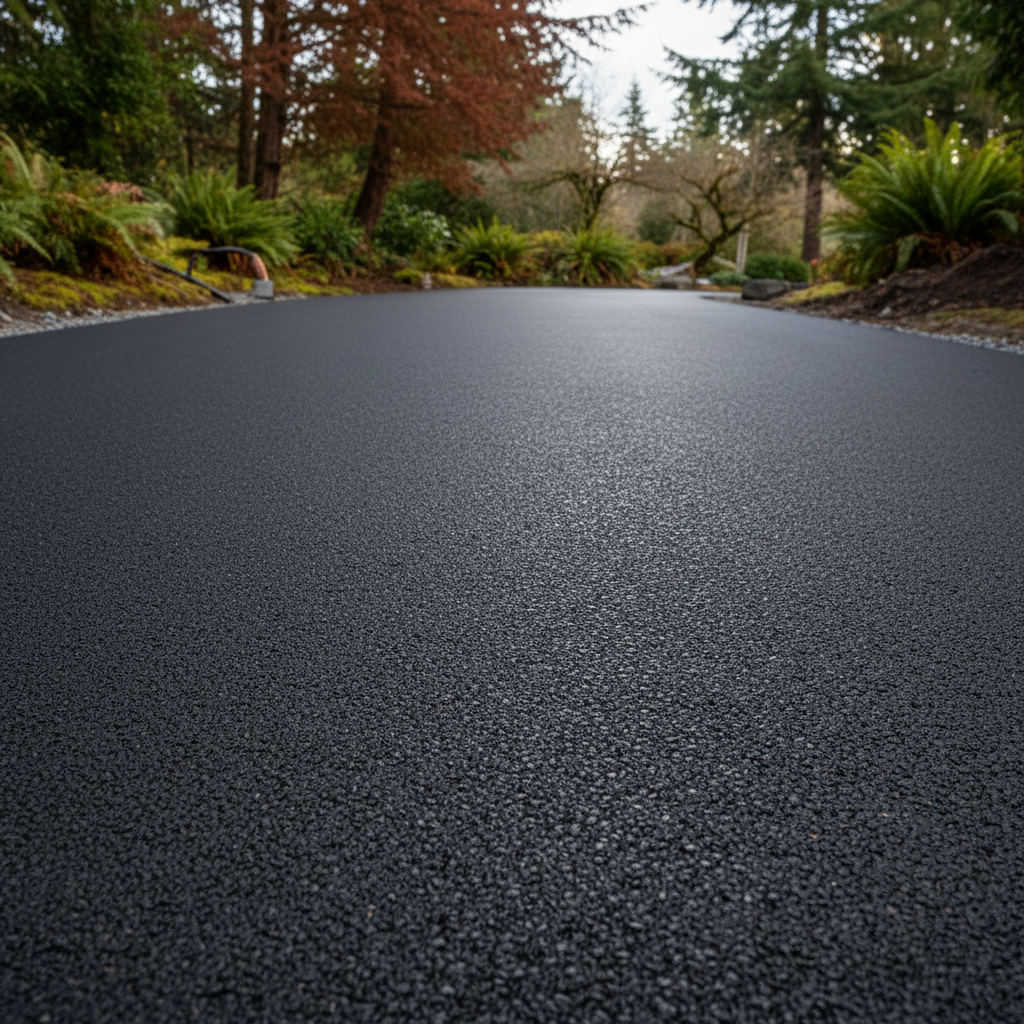
What's the real difference between asphalt and concrete for a driveway?
People ask me this all the time, and it's a good question. You see both all over Federal Way, from the older homes up on Military Road to the newer developments near Celebration Park. For a driveway, asphalt is generally more flexible than concrete. That's a big deal here in the Pacific Northwest with our freeze-thaw cycles and sometimes unstable soil. Concrete can crack more easily with ground movement or temperature shifts. Asphalt, being petroleum-based, has a bit more give.
It's also typically faster to put in and cheaper upfront. Concrete usually lasts longer if it's installed perfectly and maintained, but it costs more to install and fix. Asphalt, on the other hand, is easier to patch and resurface.
Think of it this way: concrete is like a rigid plate, while asphalt is more like a thick, flexible mat. Both can do the job, but they handle stress differently. I've seen concrete driveways around here look great for decades, and I've seen them crack to pieces in five years. Same with asphalt, but asphalt repairs are usually less intrusive and costly.
How long does an asphalt driveway actually last in our climate?
This is another common one. If you're talking about a properly installed asphalt driveway — meaning good base prep and quality materials — you're looking at 15 to 20 years, easily. But that's with some basic maintenance. If you just lay it down and forget about it, especially with our heavy rain and the shade some of us have from all the trees, you might see issues sooner. Things like sealcoating every few years and promptly fixing any small cracks are key.
Our climate, with its consistent moisture and temperature swings, can be tough on any pavement. Water is asphalt's worst enemy, no doubt about it. It gets into tiny cracks, freezes, expands, and then you've got potholes. So, the lifespan really depends on how proactive you are with its care. We've done driveways that are pushing 25 years and still look good because the homeowners have been diligent.
Why do I see cracks forming in my new asphalt driveway already?
Okay, this can be frustrating to see, especially if you just had it done. First, a little bit of hairline cracking, especially in the first year, isn't always a sign of a major problem. It's often due to the asphalt curing and settling, or minor thermal expansion and contraction. Asphalt is a natural product, and it moves.
However, if you're seeing significant cracks, like alligator cracking (a series of interconnected cracks that look like alligator skin) or deep, wide cracks, then that's a different story. This usually points to a few things:
- Poor base preparation: The foundation underneath the asphalt is crucial. If it wasn't compacted properly or had drainage issues, the asphalt on top will suffer.
- Insufficient thickness: If the asphalt layer isn't thick enough for the traffic it's getting, it'll break down faster.
- Drainage problems: Water pooling on or under the driveway will accelerate deterioration.
- Heavy loads: Parking heavy RVs or commercial vehicles on a residential driveway not designed for that load can cause premature cracking.
If you're concerned, definitely get it checked out. Small cracks are easy to fix; ignored ones turn into big, expensive problems.
Is sealcoating really necessary, or is it just an upsell?
It's absolutely necessary, especially here in Federal Way. Think of sealcoating as sunscreen for your driveway, and a protective layer against water. Our sun, even when it's not scorching, still causes oxidation, making the asphalt brittle. Then the rain, which we get plenty of, seeps into those brittle spots and starts breaking things down.
Sealcoat does a few things:
- It protects the asphalt binder from UV rays and oxidation.
- It fills tiny surface voids, making the surface less permeable to water.
- It restores the rich black color, which helps it absorb heat and stay a bit more flexible.
- It makes the surface smoother and easier to clean.
I usually recommend sealcoating a new driveway after about 6-12 months, and then every 2-3 years after that. It's a small investment that significantly extends the life of your driveway and keeps it looking sharp. Skipping it is like never changing the oil in your car – you'll pay for it eventually, and it'll be a lot more expensive.
How long do I need to stay off my new asphalt driveway after it's paved?
This is super important, and it's where people sometimes get impatient. You've got to give it time to cure. For a brand new asphalt driveway, I tell folks to stay off it for at least 2-3 days, and ideally a full week if you can manage it. That's for walking and light vehicle traffic. Heavy trucks or parking in the same spot for hours? Give it even longer, maybe 7-10 days.
Asphalt isn't like concrete that dries; it cures. It hardens as the volatile oils evaporate. If you drive on it too soon, especially when it's hot out, you can leave tire marks, indentations, or even shift the material. It's softest when it's first laid and hot. Even after a week, avoid turning your steering wheel sharply when the vehicle is stationary, especially on a hot day. That's called power steering marks, and it can scuff the surface. Just be gentle with it for the first few weeks, and you'll be fine.
My driveway has some low spots where water collects. Can that be fixed?
Yeah, standing water, or 'ponding,' is a problem. It's not just annoying; it's actively damaging your asphalt. Water sitting there will eventually penetrate the surface and weaken the base, leading to cracks and potholes. Fixing it depends on how bad the low spots are and what caused them.
Sometimes, if it's minor, we can do some targeted patching and build up the area to create better drainage. If the problem is more widespread or due to a failing base, then you might be looking at a larger repair, like an overlay or even removing and replacing sections. We'd need to come out and take a look to give you an honest assessment. It's always best to address ponding sooner rather than later to prevent bigger headaches down the road. Ace Paving always aims for proper drainage in our installs because we know what happens when you don't.
What's the best time of year to get my driveway paved in Federal Way?
For us, the sweet spot for asphalt paving is usually late spring through early fall. We need consistent dry weather and temperatures that aren't too cold. Ideally, we're looking for daytime temperatures above 50 degrees Fahrenheit, and no rain in the forecast. This allows the asphalt to be laid and compacted properly and gives it the best chance to cure correctly.
Paving in the dead of winter, when it's cold and wet, isn't ideal. The asphalt cools too quickly, making it harder to compact properly, and moisture can get trapped, leading to issues later. So, while we can sometimes do smaller repairs in less-than-perfect conditions, for a full driveway installation, we really prefer those drier, warmer months. It ensures the best possible outcome and longevity for your investment.