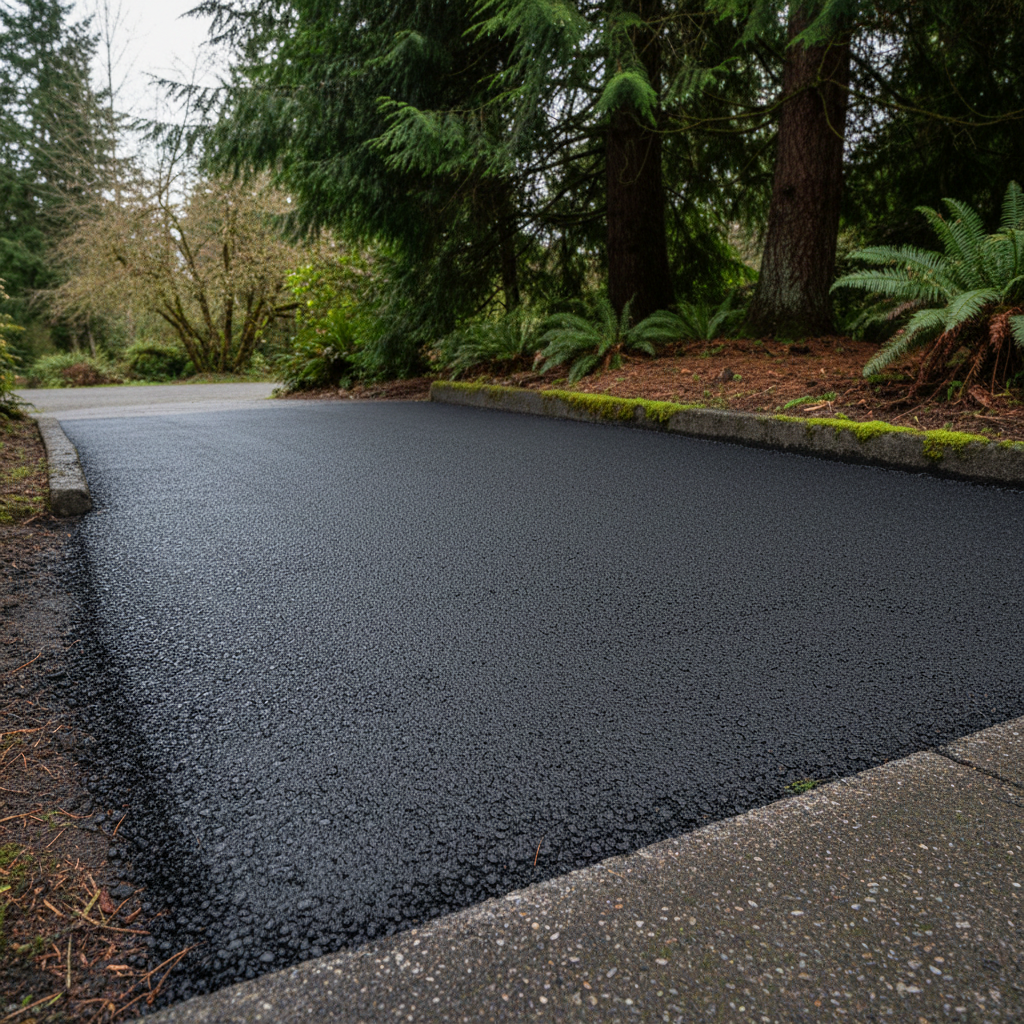
Before You Grab That Shovel: Assess the Damage
Alright, let's talk about that asphalt driveway of yours. You've probably noticed a few cracks or maybe even a pothole popping up. It's a common sight, especially with our Federal Way weather cycles – all that rain and then a bit of sun, it really does a number on pavement. Before you go buying a bunch of repair kits, you need to figure out what kind of damage you're actually dealing with.
Small cracks, say hairline ones or even those up to a quarter-inch wide, are usually pretty manageable for a homeowner. Think of them like little cuts on your skin – you can clean them up and put a band-aid on. These are often caused by minor shifts in the ground or just the asphalt drying out over time. They're important to fix because they're an open invitation for water to get underneath your driveway, and that's when things really start to go south.
Now, if you're seeing bigger cracks, like alligator cracking (a bunch of interconnected cracks that look like alligator skin), or significant potholes that are deep and wide, that's a different story. These usually mean there's a problem with the sub-base, the material underneath your asphalt. Water has likely gotten in, frozen, expanded, and then thawed, weakening the foundation. Trying to patch these yourself is often just a temporary fix, like putting a band-aid on a broken bone. It might look okay for a bit, but the underlying issue is still there, and it'll just pop up again, usually worse.
What You Can Realistically DIY
For those smaller cracks and minor surface issues, you absolutely can do some effective DIY repairs. Here's what I recommend:
Crack Filling: This is your bread and butter for minor cracks. You'll want to clean out the crack thoroughly first. Use a wire brush or even a screwdriver to get rid of any loose debris, dirt, and weeds. Then, use a leaf blower or shop vac to clear it out completely. Make sure it's dry. Then, apply a high-quality asphalt crack filler. You can find these in tubes that fit a caulk gun or pourable jugs. Follow the product instructions – they usually tell you to slightly overfill and then smooth it with a trowel or squeegee. The goal is to create a watertight seal.
Small Pothole Patching (Temporary): For very small, shallow potholes (think a few inches across and not too deep), you can use a cold patch asphalt mix. Again, clean out the pothole really well. Remove any loose asphalt, dirt, or water. Pour in the cold patch mix, slightly overfilling it. Then, compact it down. You can use a hand tamper, the back of a shovel, or even drive your car over it a few times. This is often a temporary fix to prevent further damage until a professional repair can be done, especially if the pothole is recurring.
Sealcoating (Maintenance, not repair): While not a repair, sealcoating is crucial for preventing future damage. After you've done your crack filling, and if your asphalt is generally in good shape, applying a sealcoat every few years protects it from UV rays, water, and oil spills. It's like sunscreen for your driveway. Just make sure the surface is super clean and dry before you apply it. This is a big job, but definitely doable for a homeowner if you've got the time and patience.
When It's Time to Call Ace Paving (or Another Pro)
Look, I'm all for saving a buck and doing things yourself, but there are definitely times when you just need to call in the pros. Trying to tackle these bigger jobs yourself often leads to more expense down the road because the repair fails quickly, and then you've got to pay someone to fix your fix.
Here's when you should pick up the phone:
Extensive Alligator Cracking: If your driveway looks like a reptile's back, that's a sign of significant sub-base failure. Patching the surface won't fix the underlying problem. We'll need to remove the damaged section, address the base, and then repave that area. It's a much more involved process.
Large, Deep Potholes: Potholes that are wide and deep, especially if they're recurring in the same spot, indicate a serious issue with the foundation. We have the equipment to properly excavate, rebuild the base, and lay hot asphalt, which will give you a much more durable and lasting repair than any cold patch can.
Heaving or Sinking Sections: If parts of your driveway are noticeably higher or lower than others, or if you see standing water in certain spots after it rains, that's a drainage or sub-base problem. This isn't something you can just patch over. It requires professional assessment and often significant reconstruction to ensure proper grading and water runoff.
Multiple, Widespread Issues: If your driveway has a little bit of everything – cracks here, a pothole there, some fading – it might be more cost-effective and certainly more durable to consider an asphalt overlay or even a full replacement. We can assess the overall condition and give you the best long-term solution.
After the Repair: Keep an Eye On It
Whether you do the repair yourself or have us do it, don't just forget about your driveway. Regular inspection is key. Walk your driveway once a month, especially after heavy rains or a cold snap. Catching new cracks early makes them much easier and cheaper to fix. Keep it clean – sweep off leaves and dirt, and address any oil or gas spills immediately. Our Pacific Northwest moss loves to grow in cracks, so keep those areas clear.
Maintaining your asphalt isn't a one-and-done deal. It's an ongoing process, but it'll save you a lot of headaches and money in the long run. If you're ever unsure about a repair, or if it looks like it's getting beyond what you're comfortable tackling, just give Ace Paving a call. We're happy to take a look and give you an honest assessment.